





The whole point of mitigation is to stop the damage from growing. Do not confuse it with rebuilding. Think of it as all the protective work that comes first, aimed at saving what remains sound. Our Springfield crew mitigates a loss in four moves: control the source, extract the water, contain the wet zone and stabilize the building. When this stage goes right, there is less to rebuild afterward, occasionally nothing at all.
The words mitigation and restoration get used as if they were interchangeable. Each is its own phase of the job. The emergency stage is mitigation, where we stop the loss, keep it from spreading and stabilize the house. Once the structure tests dry, restoration takes over and covers repairing or rebuilding finishes, drywall and floors that were damaged. Insurers treat them as separate line items too, so it helps to know which phase you are in.
Four tasks make up most mitigation visits. Source control, so no new water enters. Extraction, so standing water is gone. Containment, using plastic barriers and controlled airflow so moisture and contaminants stay out of clean rooms. Fourth is stabilization: unsalvageable materials come out, surfaces receive antimicrobial treatment, and dehumidifiers and air movers are placed. Furniture and personal items are protected too, either relocated or raised on blocks.
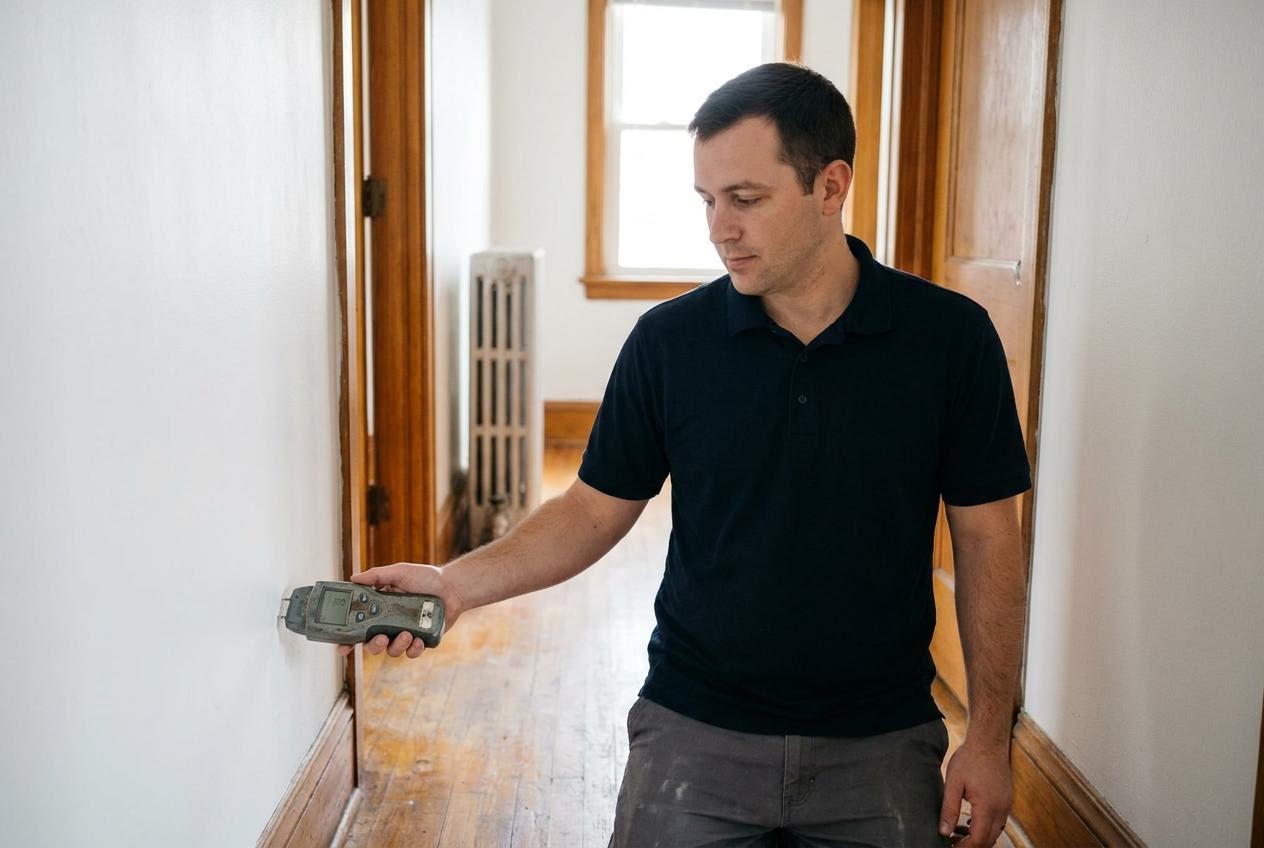
Comparing DIY and Professional Water Damage Mitigation
While some minor restoration tasks can be handled by handy homeowners, most water damage work requires professional expertise, specialized equipment, and proper safety training. Here's a comparison:
| Factor | DIY Approach | Professional Service |
|---|---|---|
| Drying check | Assume a few days was enough | Readings logged every visit until dry |
| Extraction | Wet vac and a stack of towels | Bulk water out with pumps, extractors |
| Source control | Close a valve, fingers crossed | Cause verified, isolated, recorded |
| What stays or goes | Judging by look and feel | Keep or remove, based on moisture readings |
| Insurance documentation | Some pictures on your phone | Photos plus moisture readings each day |
Water Damage Mitigation Issues? We Can Help.
Call Springfield Restoration Pros for fast, reliable service.
Call (574) 369-6058 TodayHow to Tell You Need Water Damage Mitigation
Catching these issues early helps you avoid costly problems and protect your property. Watch for these telltale signs that professional help is needed:
- Wet materials have sat for a day and a musty smell is starting.
- An opening in the roof or at a window lets rainwater enter the building.
- Flooring is carrying moisture past the doorway to an adjoining room.
- The pipe was repaired by a plumber, and the water it released is still there.
- The space under your cabinets in the bathroom or kitchen took on water you cannot get to.
- An adjuster or agent said you must reasonably limit additional damage.
- The leak is fixed, yet cabinets, walls or flooring remain wet.
Act Before It Gets Worse
Many water damage problems start small but can escalate quickly into costly emergencies. Call Springfield Restoration Pros at (574) 369-6058 at the first sign of trouble.
The Benefits of Professional Water Damage Mitigation
Fast decisions, one after another, are what mitigation consists of. What drywall stays and dries where it is, and what must be removed? Which category applies, 1, 2 or 3, and did that change after the leak first began? Is removing the cabinet toe kick necessary? Each decision rests on meter readings and our training, never on whether something seems dry to the eye or hand.
Good mitigation also protects your claim. Under most policies you must act reasonably to keep the damage from growing, with proof that you did. We photograph conditions on arrival, record moisture readings daily and keep a list of anything removed. The result is a file documenting both the damage and the steps taken. It also gives the repair contractor a clear starting point, with no wet surprises behind new drywall.
Frequently Asked Questions About Water Damage Mitigation
Questions About Water Damage Mitigation?
Our experienced technicians can assess your situation and recommend the best solution.
Get Help: (574) 369-6058How to Prevent Water Damage Mitigation Problems
Taking preventive measures can help you avoid costly water damage issues down the road. Here are our expert recommendations:
- Find the main water valve and make sure it has not seized.
- Once a month, look beneath sinks and near toilets for stains, drips or soft spots in the floor.
- Trade rubber washer hoses for braided steel, and renew them roughly every five years.
- Downspouts should empty well clear of the foundation, and gutters need to stay free of debris.
- Ground next to the foundation should fall away from it, which keeps water from collecting there.
- Roof penetrations, door frames and window edges should be sealed ahead of the next big storm.
How Our Water Damage Mitigation Works
Our systematic approach delivers quality results on every project. Here's what you can expect when you choose Springfield Restoration Pros:
Control the Source
The supply gets shut off, the broken line capped, or the opening letting water in tarped and boarded. If a plumber or roofer is needed for the permanent fix, we coordinate the timing.
Extract the Water
Pumps and extractors take out the standing water, and we inspect the carpet and pad. Fast removal of bulk water limits damage more than drying equipment could by itself.
Set Up Containment
We isolate the affected rooms from the rest through airflow control and plastic barriers. This keeps humidity, dust and any contaminants from travelling through the house while work is under way.
Stabilize and Dry
Materials past saving come out, an antimicrobial is applied to surfaces, and air movers plus dehumidifiers go in. Each visit includes logged moisture readings, and the structure is usually ready for repair work within 3 to 5 days.
Get Water Damage Mitigation Help Today
The sooner you call, the sooner we can help. Reach Springfield Restoration Pros for same-day service.
Get Help: (574) 369-6058